Client
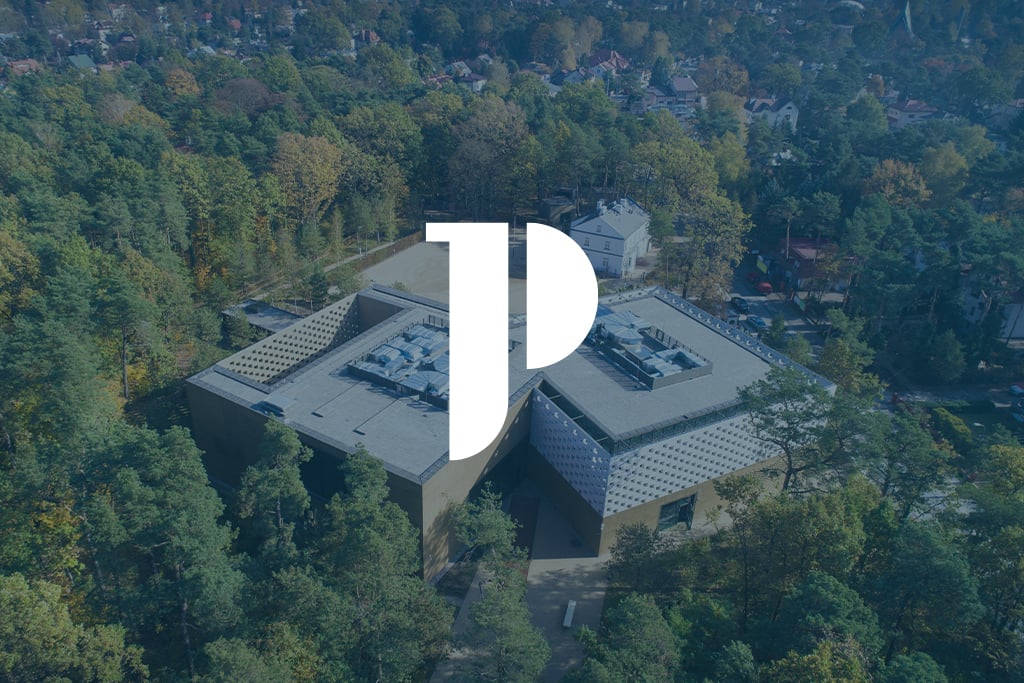
Józef Piłsudski Museum in Sulejówek
About project
The museum had an existing website but it did not fulfill its intended purpose – both in terms of usability and communication. However, the issue was not limited to the interface itself. The key challenge was the lack of a clearly defined purpose for the website and the absence of a coherent vision regarding who it was meant to address and why.
My role was to conduct a UX discovery process and design a new information architecture based on real user needs and the institution’s strategic goals.
What problems does the current website have?
The project began with a recurring concern raised by the museum team: “the website isn’t working.” Staff members regularly received phone calls from visitors who were unable to find basic information such as opening hours, ticket prices, or event details.
During the initial conversations, it became clear that the museum did not have a clearly defined purpose for the website nor well-defined target audiences. The site attempted to adress everyone’s needs at once but as a result it did not address anyone’s needs sufficiently.
For this reason, I decided to initiate a comprehensive UX discovery phase to address that problem.
Google Analytics Data Analysis
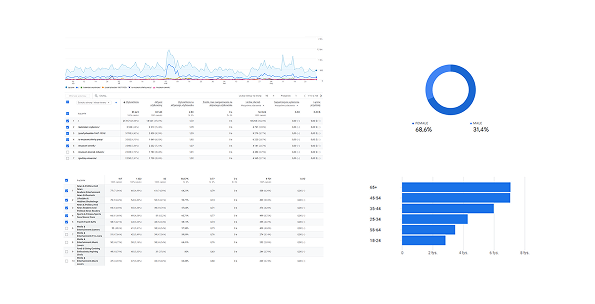
At the beginning of the project, I decided to analyze data from the museum’s existing website using Google Analytics. The goal was to verify whether the issues reported by the staff were reflected in the data and to identify actual user behaviors.
The analysis allowed me to answer several key questions:
- Which subpages generate the highest traffic?
- What are the most common user journeys?
- Where the users leave the website
- Which devices dominate (desktop vs. mobile)?
- Do users land directly on specific subpages (e.g., events, tickets)?
- Which content is being ignored?
Heuristic Audit
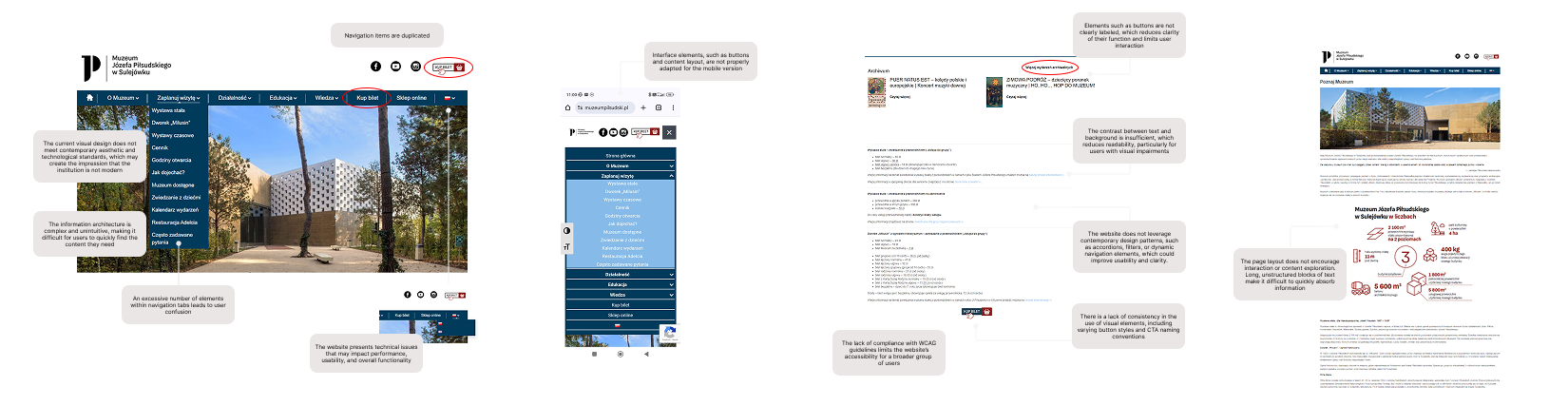
The next step in the process was conducting a usability audit based on Nielsen’s heuristics. The goal was to identify systemic issues affecting the user experience – across structure, interface design, and accessibility.
The analysis revealed that the current website:
- has an overly complex and unintuitive information structure,
- contains technical issues and lacks proper adaptation for mobile devices,
- does not provide sufficient contrast or full compliance with WCAG accessibility guidelines,
- lacks a consistent component system (e.g., inconsistent button styles),
- does not support quick content scanning due to long text blocks and weak visual hierarchy.
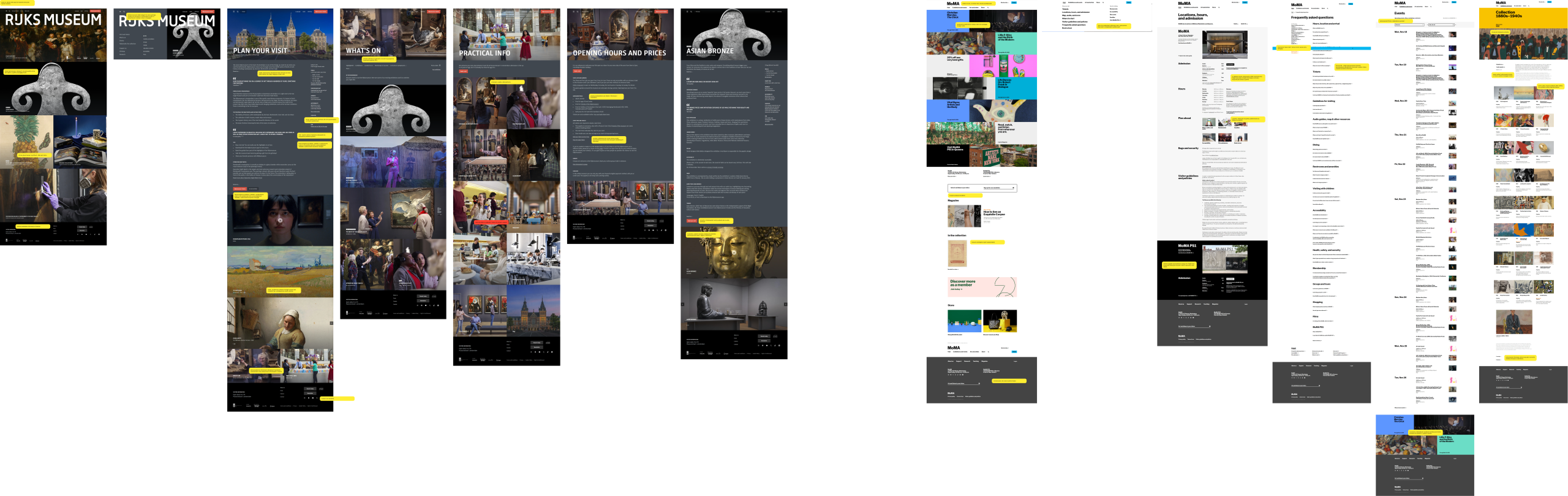
Competition Analysis
Desk Research
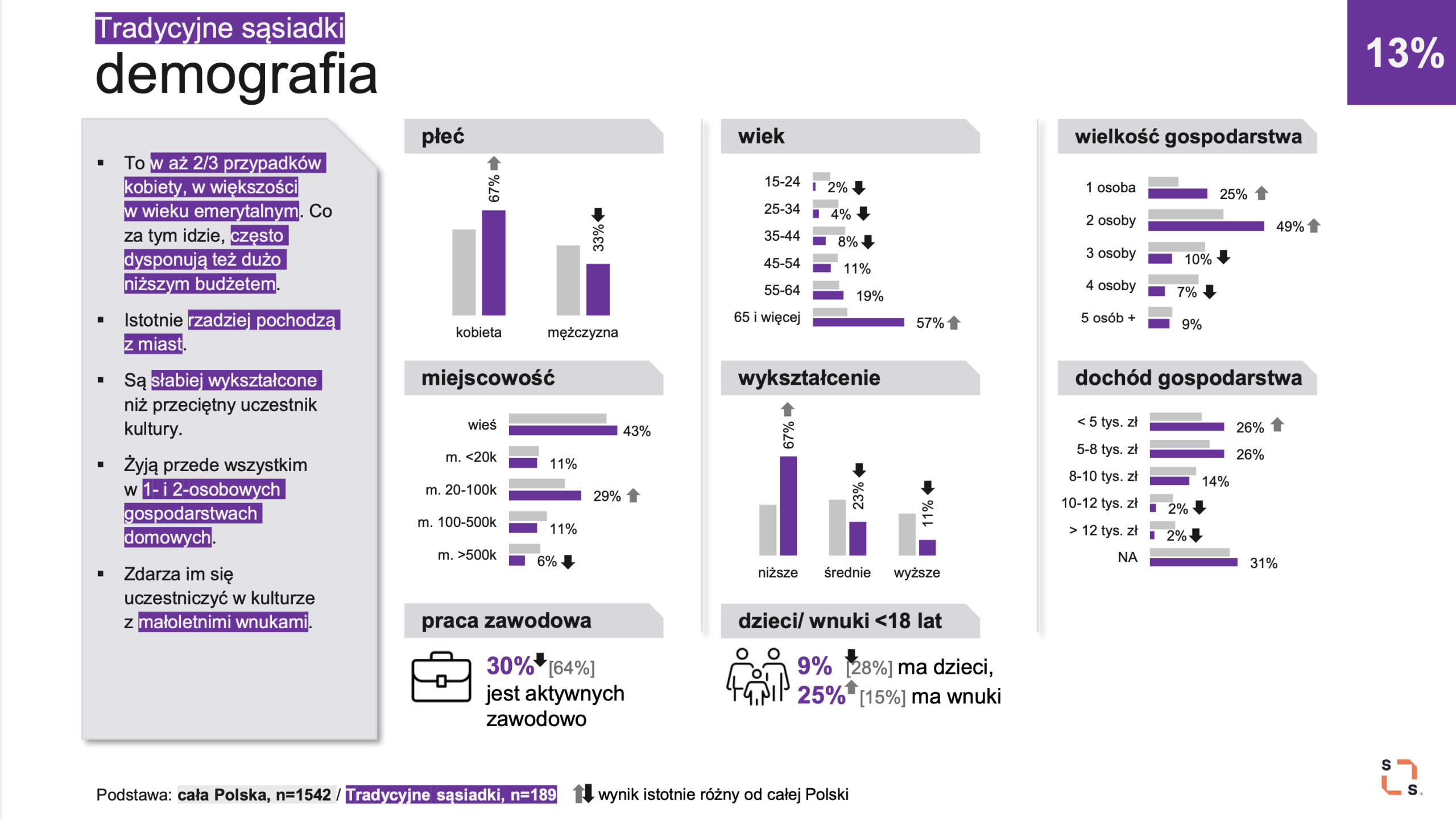
As part of the discovery phase, I conducted desk research focused on publicly available national audience studies in Poland. Since the museum positions its offer not only locally but also on a nationwide level, it was important to understand broader trends in cultural participation.
Audience Research to Define User Profiles
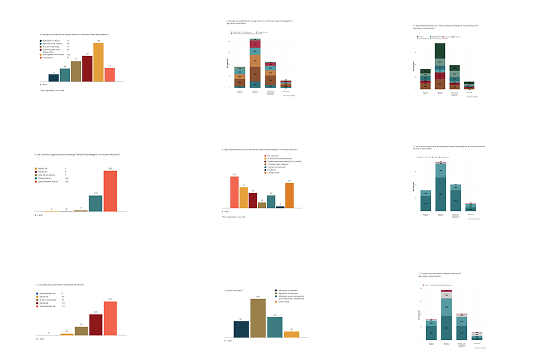
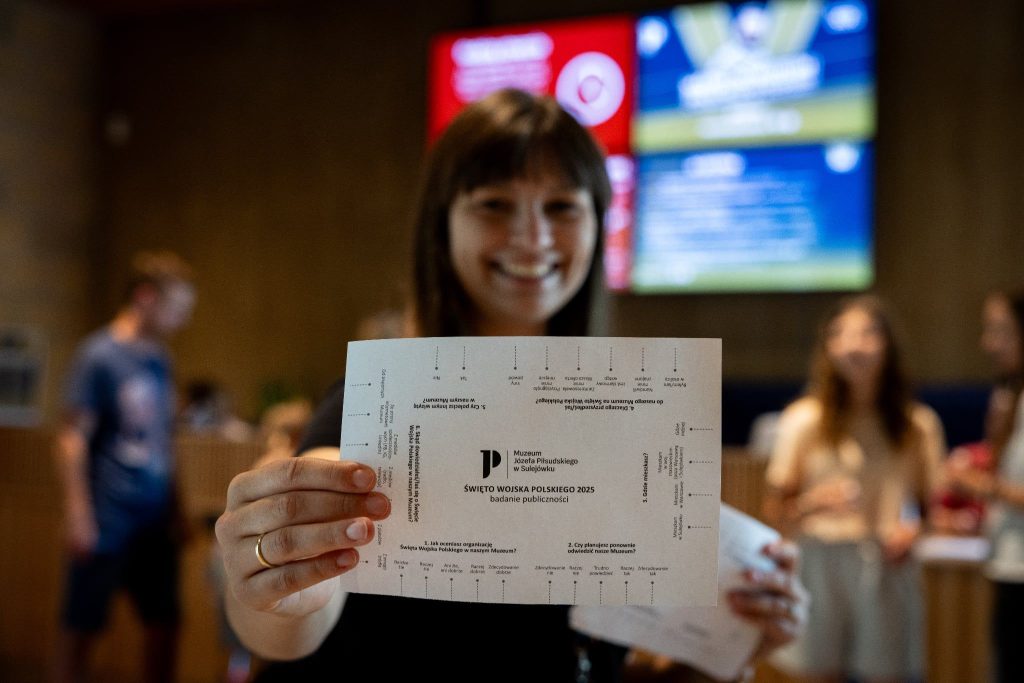
To better understand the museum’s audience, I designed and conducted a series of on-site surveys during major events organised by the museum. I chose a short and simplified questionnaire that could be completed in just a few minutes, without the need for a pen. The goal was to minimize friction and encourage higher participation rates.
The insights gathered from the research became a crucial foundation for redefining the purpose of the website and designing a new information architecture – one based on real user needs rather than internal assumptions.
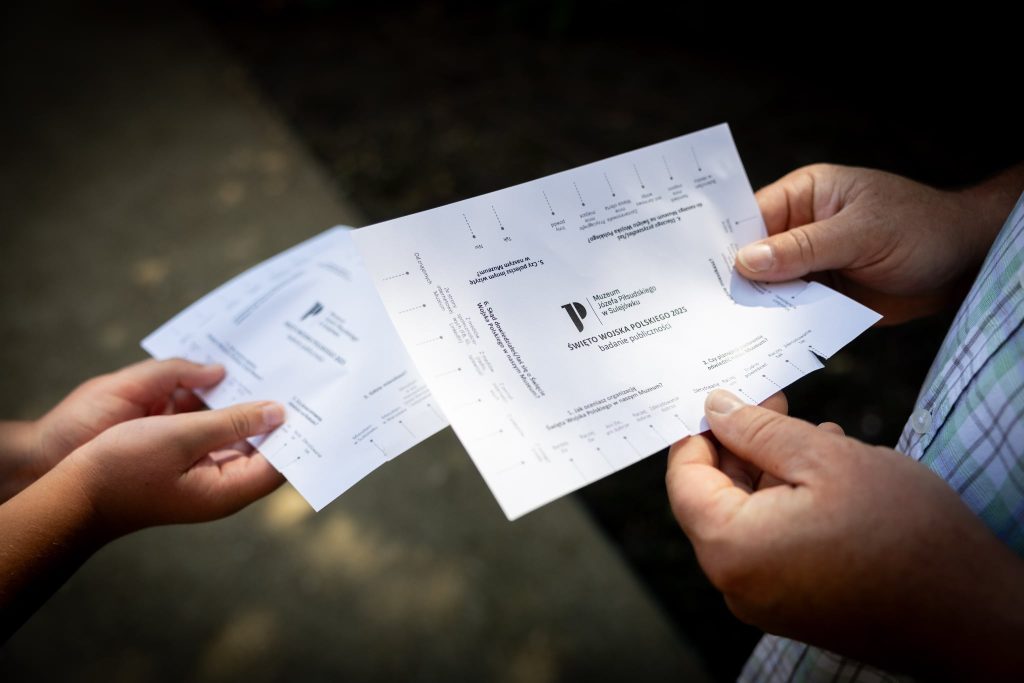
Research Scope
I conducted 3 studies in 2025, taking full ownership of the entire process:
- developing the research questions,
- designing the questionnaire,
- designing the visual layout of the survey,
- conducting field research on-site,
- analyzing the collected data,
- presenting the findings to the museum team.
Key Findings
- The majority of visitors were residents of Warsaw.
- The primary motivation for visiting the museum was the location itself and the museum’s offer.
- The most common sources of information about the events were: word of mouth, social media, the museum’s website.
Impact on the Project
The collected data allowed us to better understand:
- who the museum’s visitors are,
- what motivates them to visit,
- how they discover information about events.
Series of Workshops with the Museum Team
I conducted a series of four strategic workshops with museum employees, involving representatives from different departments.
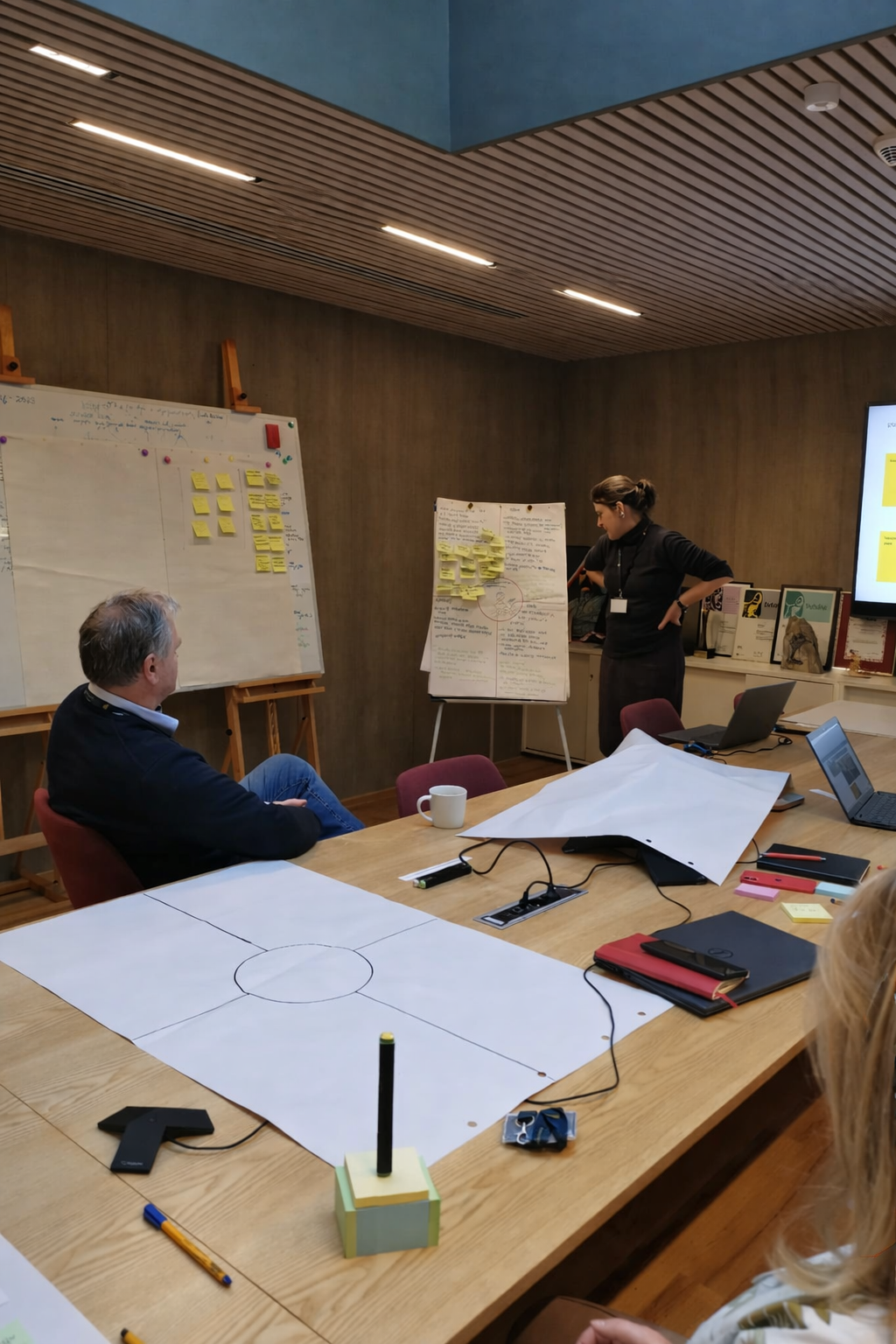
01 Understanding the Audience
The goal was to better understand who interacts with the museum on a daily basis – by phone, email, or in person. Together, we analyzed:
- the most frequent questions visitors ask,
- what information they struggle to find on the website,
- what goals they aim to achieve (e.g., purchasing a ticket, enrolling a child in a workshop, accessing educational materials).
This allowed us to confront the existing website structure with real user needs rather than relying solely on the museum’s internal organizational structure.
02 Benchmarking Unique Value
Another workshop exercise focused on identifying the museum’s unique differentiators and comparing them with those of competing institutions.
This activity helped define what the communication should focus on and prioritize content within the new information architecture.
Workshop Notes

02 Define: what are the main problems we want to solve?
- Lack of a clearly defined website purpose
- Overly complex and unintuitive information structure
- Issues with accessibility and responsiveness
- Unattractive and ineffective presentation of the museum’s offer
- Content overload and poor text readability
Information architecture